Where the word giclee came from
Printmaker Jack Duganne adopted the word around 1990 while working at Nash Editions, the California print studio founded by the musician Graham Nash, according to Wikipedia's article on giclee. It comes from the French gicleur, the technical term for a jet or nozzle, and the verb gicler, to squirt out. The first giclee prints were made on a modified Iris printer, an industrial proofing inkjet that held the paper on a rotating drum.
Printmakers wanted a name that set fine art inkjet prints apart from office printouts. The name stuck, and today the same article notes it is "loosely associated with other types of inkjet printing" and applied to art prints of varying quality.
What makes an inkjet print a giclee
Modern giclee printers are large-format machines from Canon, Epson and HP. Sellers who use the word carefully mean three things by it.
- Pigment inks. Pigment particles sit on the paper surface and resist fading better than dye inks, which is why archival printing prefers them.
- More than four colors. Office printers mix cyan, magenta, yellow and black. Fine art printers add extra cartridges for smoother skin tones, fur and gradients.
- Archival paper or canvas. Cotton rag or acid-free fine art paper keeps its color and does not yellow the way cheap paper does.
A print that lacks one of these can still be called giclee by the seller, because the label carries no legal meaning.
Giclee compared with other print types
| Print type | How the image is made | Typical use |
|---|
| Giclee | Inkjet sprays fine droplets of pigment ink onto fine art paper or canvas | Art prints, limited editions, portraits |
| Standard inkjet | Office or home inkjet, often dye inks on plain or photo paper | Documents, quick photo prints |
| C-type photo print | Light exposes photographic paper, which is then developed in chemicals | Photographs on lustre or glossy paper |
| Offset lithograph | Ink passes from metal plates to a rubber blanket to the paper as tiny dots | Posters and books printed in large runs |
Look at an offset print through a magnifier and you see a regular dot pattern. A giclee print shows continuous tone, which matters for soft fur and a painted background.
Questions to ask before you buy a giclee print
Because the word has no standard, ask the seller for the facts behind it.
- Which inks? Pigment inks last longer on the wall than dye inks.
- Which paper? Ask for the paper type in plain words, such as archival matte fine art paper or cotton rag. A paper weight in gsm tells you how heavy the sheet feels.
- What finish? Matte paper keeps glare down behind a frame front. Glossy paper shows reflections.
- What covers the front? Glass is heavy and can break. Acrylic is lighter and shatter resistant.
- How big can the source image go? A sharp, large file makes a sharp print. A small or blurry file stays blurry on any paper.
For a pet portrait, the starting photo sets the ceiling on detail, and our guide to the best photo for a pet portrait shows what a usable phone photo looks like.
How our pet portraits are printed
We describe our framed portraits by their materials. Each portrait is printed on archival fine art matte paper, set in a one inch white mat and a solid wood frame in black, white or natural wood, with a shatter resistant acrylic front. It arrives with the hanging hardware already installed. The matte paper keeps glare off soft styles such as Watercolor, where pale washes of color carry the detail.
Two framed sizes are available, 8 x 10 in and 12 x 16 in. The pet portrait sizes guide compares how each looks on a wall and from across a room.
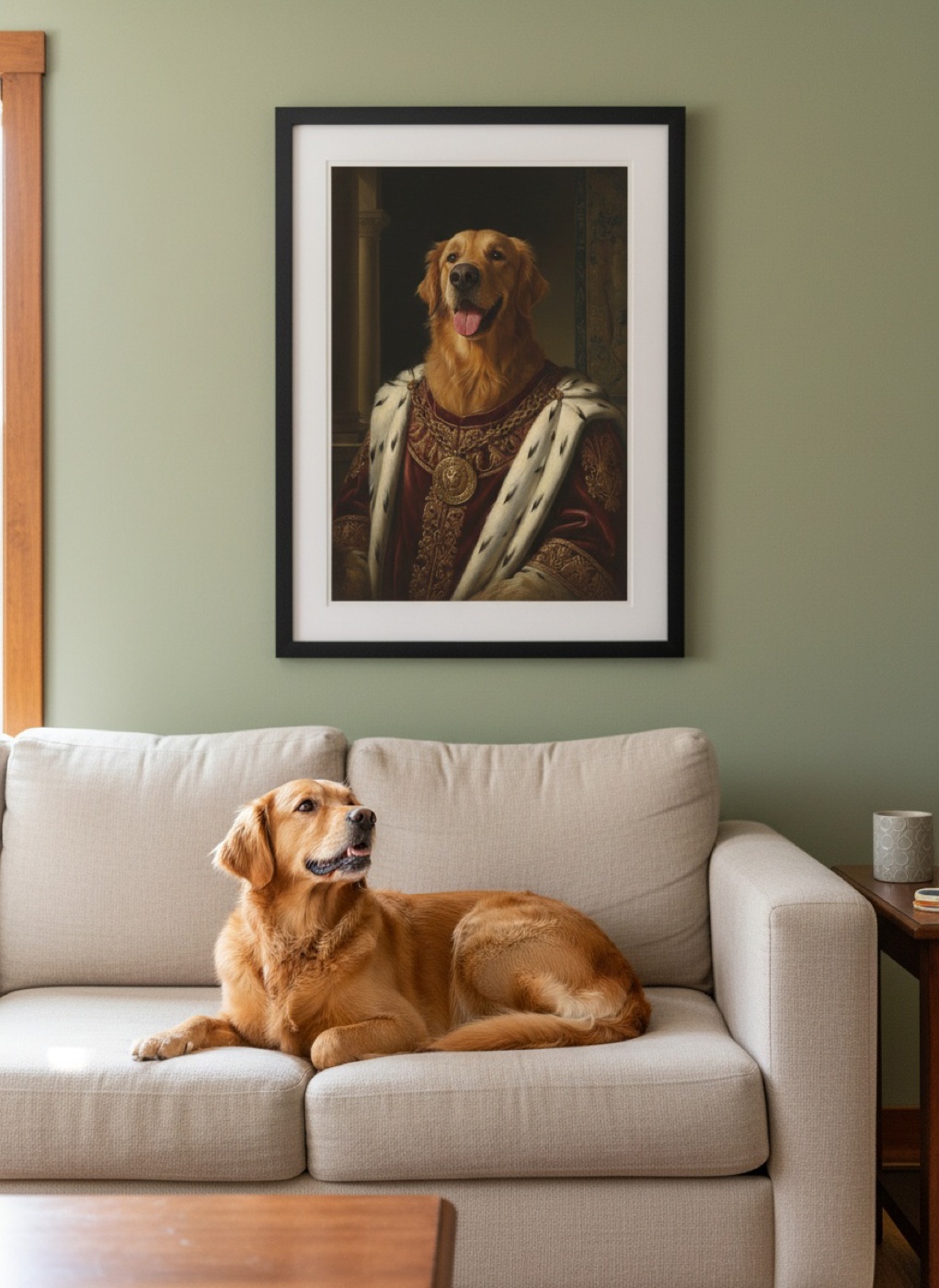 A framed portrait of Goldie the golden retriever on a living room wall
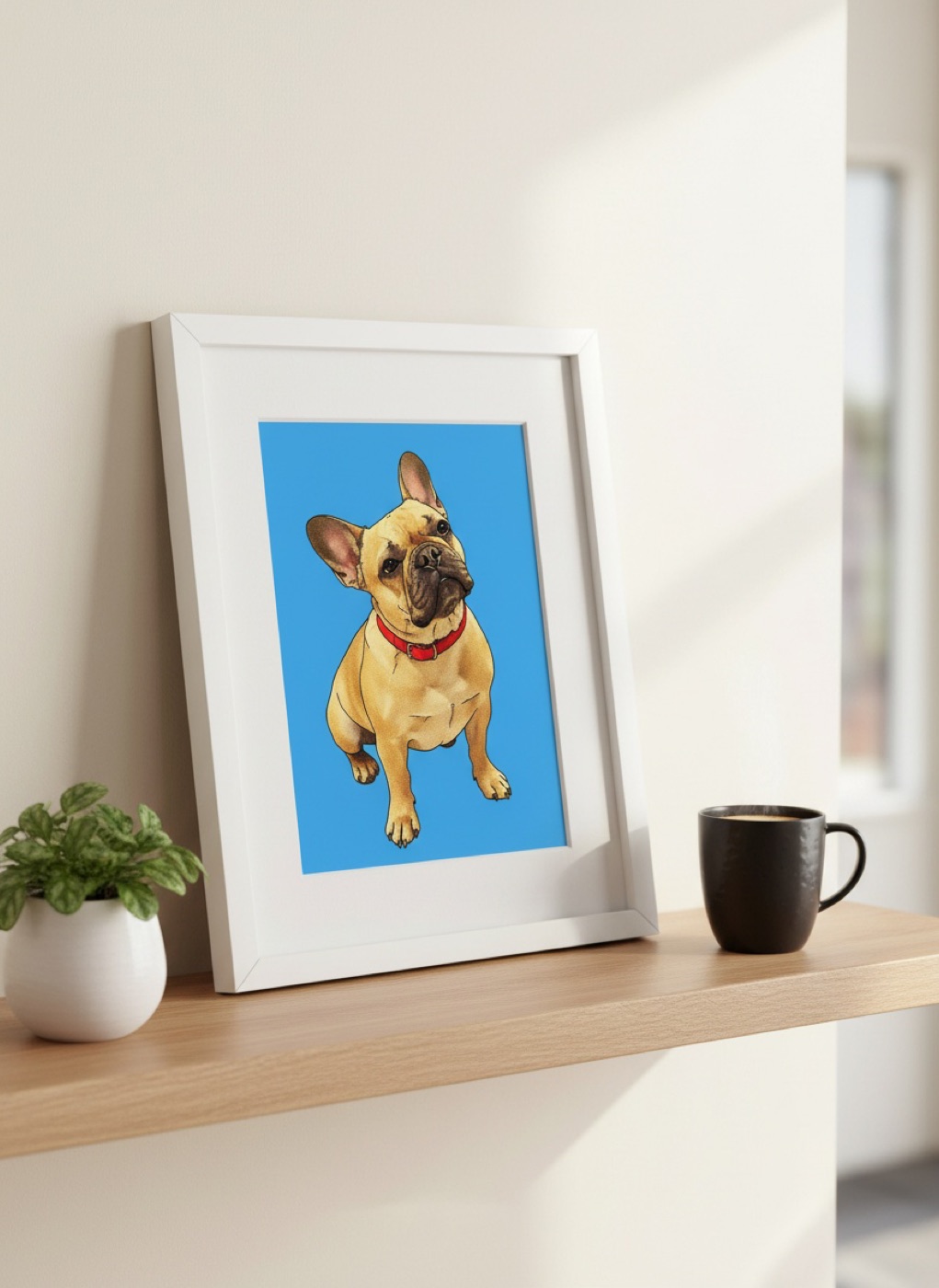 A framed portrait of Biscuit the French bulldog on a shelf
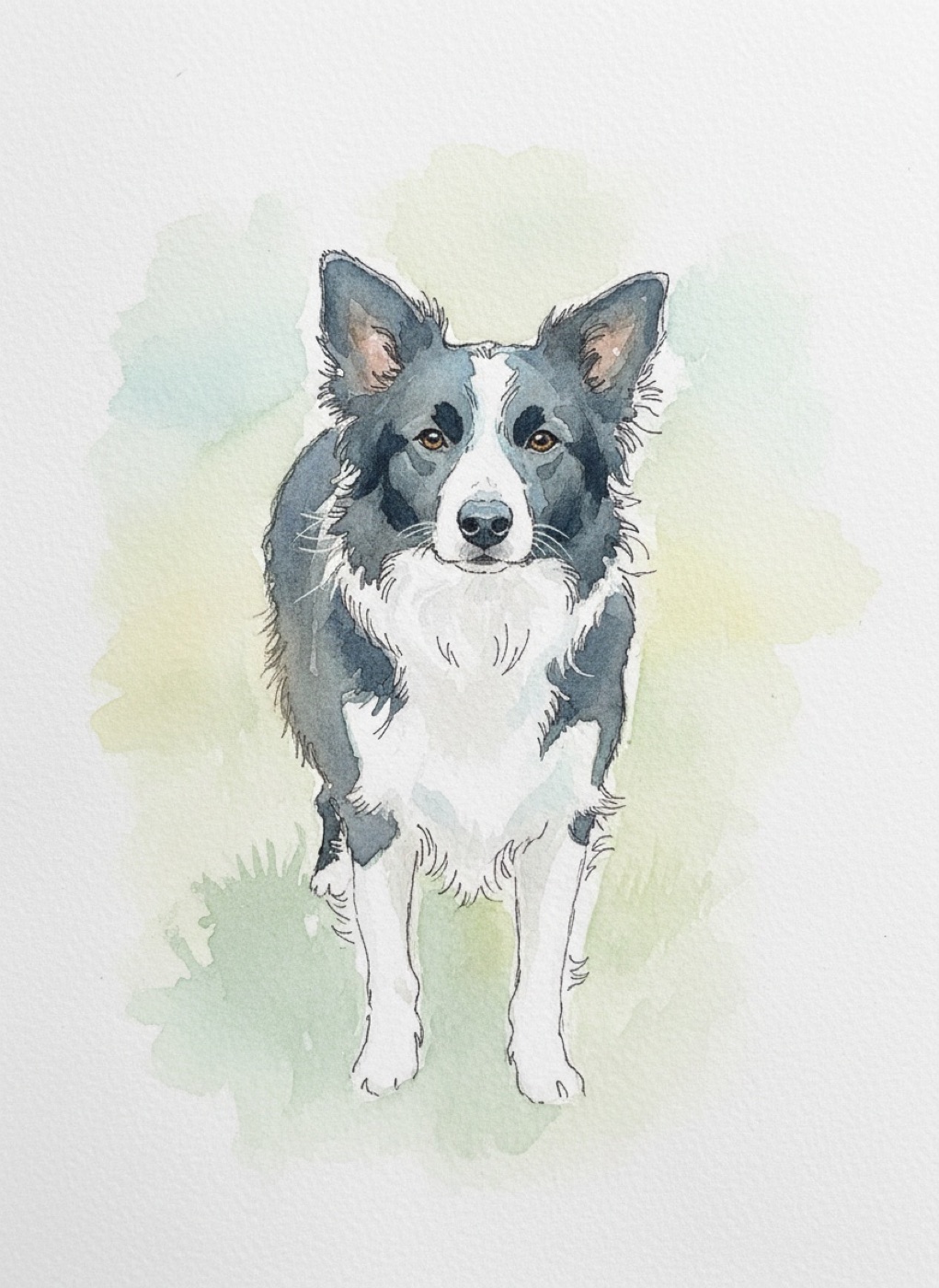 Style sample: Pepper, a border collie, in the Watercolor style
Keeping any fine art print looking right
- Hang it out of direct sun. Even pigment inks fade faster in strong daylight.
- Avoid damp walls. Bathrooms and spots above a kettle let moisture reach the paper.
- Clean the front, never the paper. Wipe an acrylic front with a soft, dry microfiber cloth. Paper towels can scratch it.
Updated November 24, 2026