How the poem lost its author and found her again
National Geographic reported in 2023 that Clyne-Rekhy wrote the poem in one sitting at her family home, after her mother suggested she put her grief on paper. She typed copies for friends who had lost pets and left her name off them. The copies traveled from hand to hand, and the name never caught up.
| Year | What happened | Source |
|---|
| 1959 | Clyne-Rekhy writes the poem in Scotland, the day after Major dies | National Geographic, 2023 |
| 1992 or earlier | A Mid-Atlantic Great Dane Rescue League newsletter prints it | Wikipedia, citing a 1993 newsgroup post |
| January 7, 1993 | Earliest known online mention, on the rec.pets.dogs newsgroup | Wikipedia) |
| February 1994 | Dear Abby prints it, without a name, after a reader in Michigan sends it in | National Geographic, 2023 |
| January 2023 | Art historian Paul Koudounaris contacts Clyne-Rekhy after about a decade of research | National Geographic, 2023 |
Koudounaris found 15 separate copyright claims to the poem and a list of 25 possible authors before he reached Clyne-Rekhy, according to National Geographic. She still had her handwritten draft. She had spent years in India and later moved to Spain, which is why she did not know how far the poem had gone in the United States.
What the poem says, part by part
The poem runs as one short prose piece with no stanza breaks. The Rainbow Bridge site linked above prints it under the notice "© Edna Clyne-Rekhy, 1959", so this page quotes only its opening line and summarizes the rest.
- The place. A meadow with hills and green grass sits "just this side of heaven", at the foot of the bridge. A pet goes there when it dies.
- The pets made well. Old and sick animals are whole and strong again. They have food, water, sunshine and each other.
- The one thing missing. Each pet misses the person it left behind.
- The reunion. One day a pet stops, looks into the distance and runs toward its person across the grass.
- The crossing. The pet and the person meet, and the poem ends with the pet and the person crossing together.
The poem names no species and no breed, so it fits a cat, a rabbit or a horse as well as a dog. Veterinary schools use it in grief support too: the University of Georgia's veterinary teaching hospital holds a Rainbow Bridge Walk for clients whose animals have died, and the walk features the poem.
"Crossed the Rainbow Bridge" and what the poem means
Many owners write that their pet "crossed the Rainbow Bridge" on the day it died. In the poem, the pet does not cross alone. It waits on the near side, in the meadow, and crosses only later with its person. The accurate phrases are "went to the Rainbow Bridge" or "waiting at the Rainbow Bridge".
In a sympathy message either wording reads fine. The difference shows when the words are permanent. For a garden stone, an engraved tag or the card in a memorial frame, "waiting at the Rainbow Bridge" matches the poem.
How to print the Rainbow Bridge poem
A printable copy fits on one page at a normal font size. Clyne-Rekhy is named as the copyright holder, so print a copy for your own home or a card from a source that credits her, and ask the rights holder before putting the poem on anything you sell.
- Copy the text from a credited source. The Rainbow Bridge site linked above prints the full poem under her name.
- Add the credit line. Put "Edna Clyne-Rekhy, 1959" under the last line. Many older printables still say "author unknown", which is no longer correct.
- Add your pet's name and years at the top or bottom. This turns a common poem into a page about one animal.
- Choose a size that matches where it goes. A folded card or a 5 x 7 in sheet suits a sympathy card. Letter size suits a frame on a wall.
- Print on heavy matte paper. Glossy paper reflects light behind glass and makes small type harder to read.
Pairing the poem with a memorial portrait
Our portraits are printed without text, so the poem goes in its own frame beside the portrait. The pairing works best when the two frames sit at the same height on a shelf or hang side by side.
- On a shelf. The 8 x 10 in portrait stands next to a small framed copy of the poem, the urn and the collar. Our pet memorial ideas cover the rest of a memorial shelf.
- On a wall. The 12 x 16 in portrait hangs beside a letter size print of the poem. The size and frame guide compares the two sizes.
- As a gift for a friend. Send the portrait with the printed poem tucked into the card, and write the pet's name on both. The portrait ships straight to their address if you enter it at checkout.
Each portrait comes framed in black, white or natural wood with a one inch white mat, ready to hang, and you see the finished portrait on screen before you pay. Watercolor is the softest of the five styles and suits a frame beside the poem; the Watercolor style page shows it on sample pets. If you only have a few photos of the pet, the memorial portrait guide explains how to choose among them.
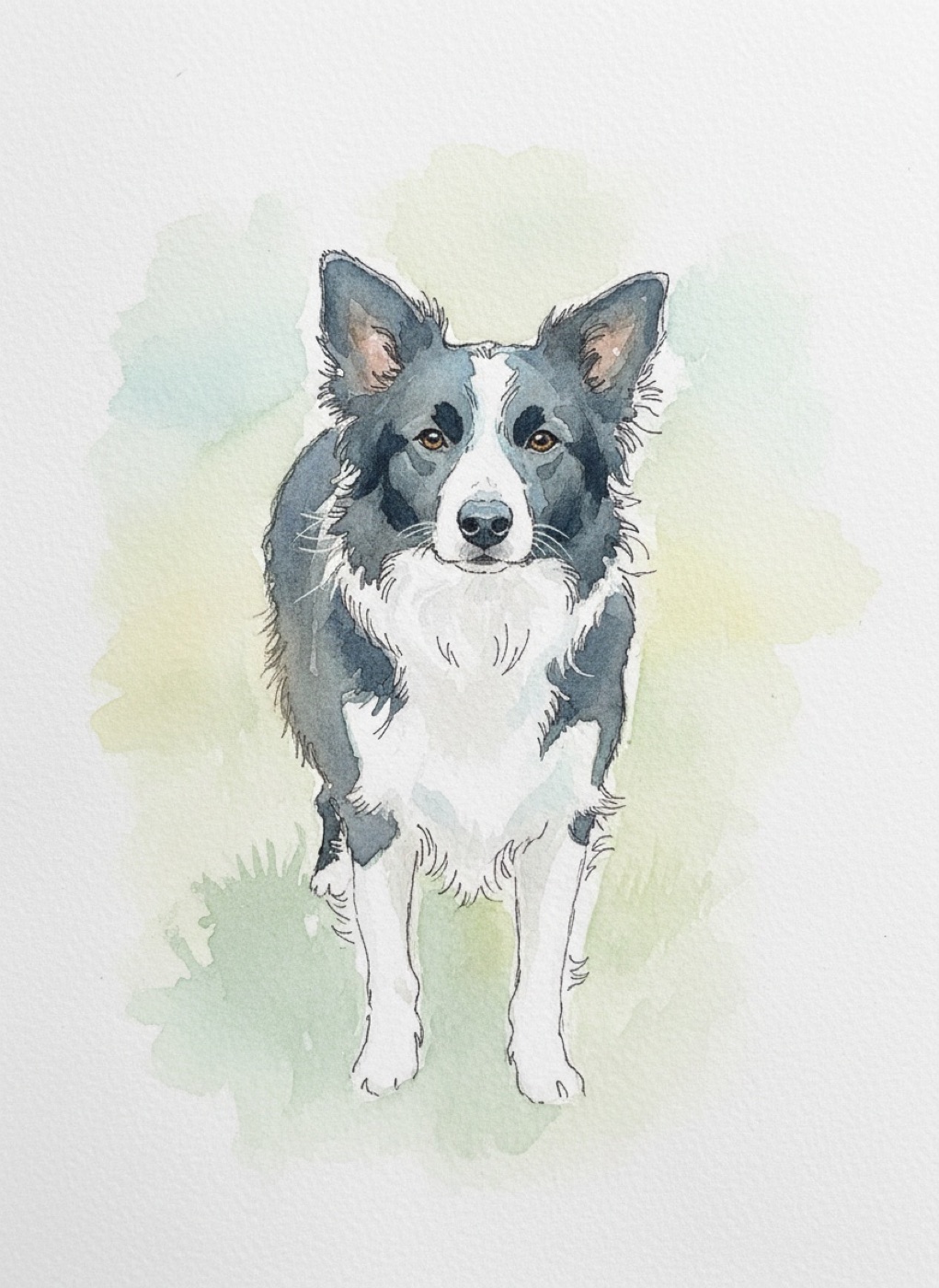 Style sample: Pepper, a border collie, in the Watercolor style
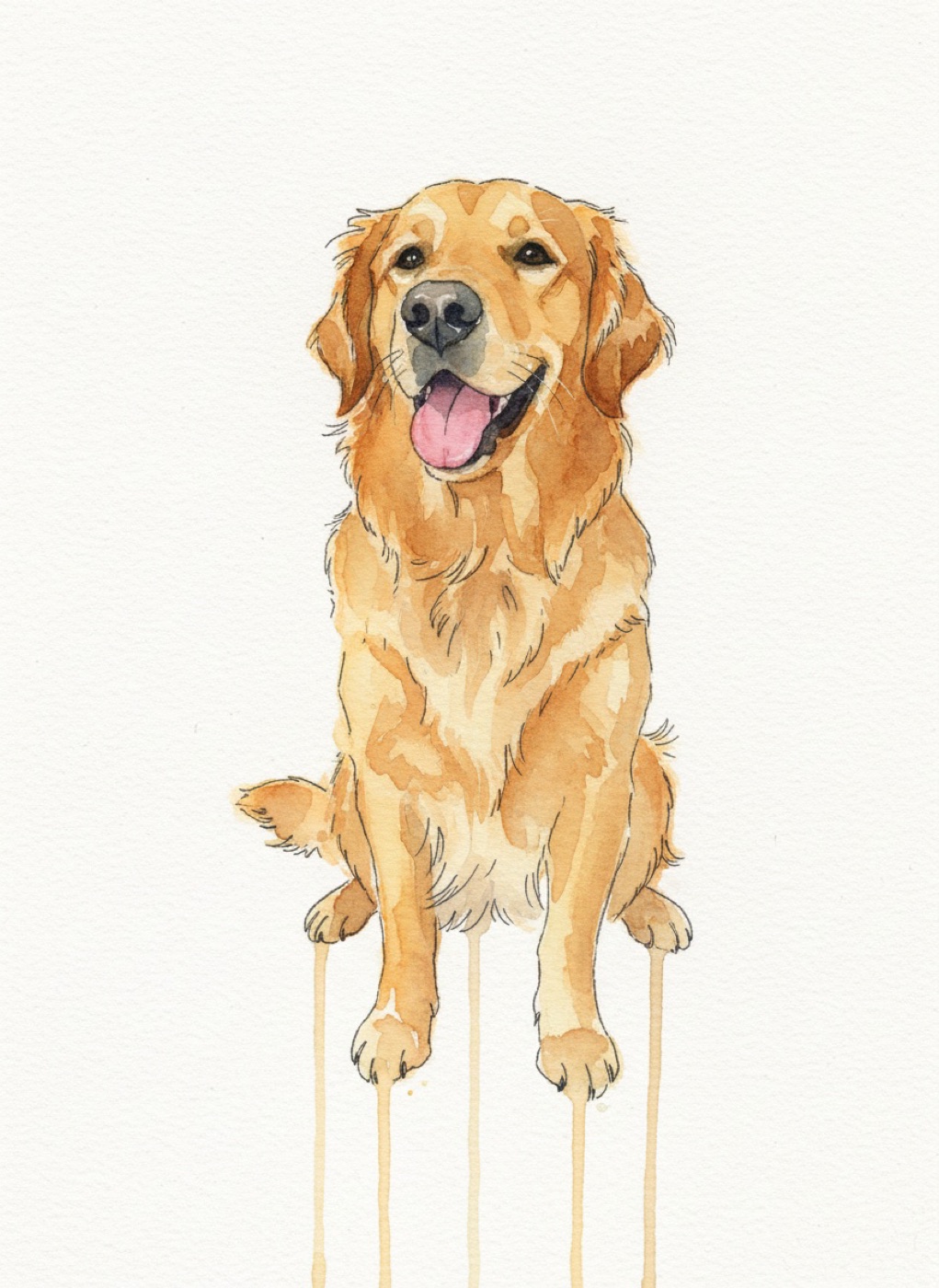 Style sample: Goldie, a golden retriever, in the Watercolor style
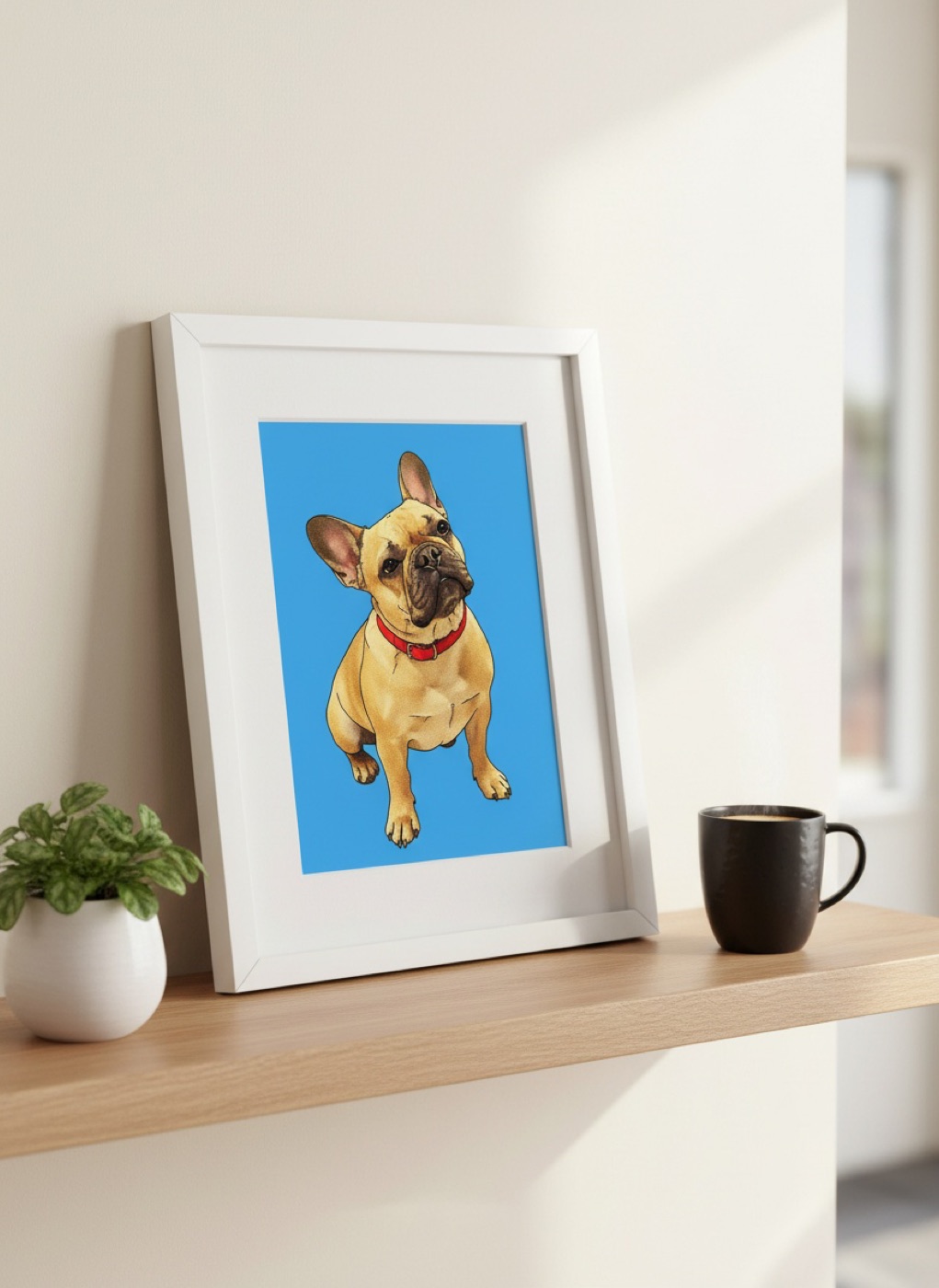 A framed portrait of Biscuit the French bulldog on a shelf
Mistakes people make with the poem
- Printing "author unknown". The author has been known since 2023. Credit Edna Clyne-Rekhy.
- Using an edited version without checking it. Decades of retyping produced copies with added lines and changed words. Compare your copy with a credited source before you frame it.
- Engraving the whole poem on a small stone. The full text turns into tiny type. A stone holds the pet's name, the years and "Waiting at the Rainbow Bridge".
- Sending only the poem. The poem is shared widely, so add one memory of the pet in your own words.
For other lines with checked sources, from Kipling to the Old Drum speech, see our quotes about losing a dog.
Updated November 19, 2026