A husky portrait with a preview, a frame and free shipping
Most husky art for sale online is posters and wall art of someone else's dog, or drawing tutorials for making your own. A custom portrait starts from your husky's photo and is made with digital art tools in a style that looks painted.
- A preview before you pay. You see the finished portrait first, and a preview that looks wrong can be re-done free. Each visitor gets a limited number of previews, so upload your sharpest photo first.
- A frame ready for the wall. Black, white or natural wood, with a one inch white mat, a clear acrylic front and hanging hardware fitted.
- Two sizes. 8 x 10 in and 12 x 16 in.
- Delivery. With free shipping, the frame arrives about 4 to 8 business days after you approve the preview. Faster options at checkout show their own arrival dates.
Already have a husky painting or drawing? Choose "I already have art" at the start, and we print and frame that piece.
From phone photo to framed husky painting
- Upload a photo of your husky alone, with the face sharp and filling most of the frame.
- Pick one of the five styles: Royal, Watercolor, Pop Art, Storybook or Astronaut. Then study the preview, eyes first.
- Approve, then choose the size and frame at checkout. Printing starts only after you approve.
Getting husky eyes right in the photo
The American Kennel Club Siberian Husky standard says the eyes may be brown or blue, one of each, or parti-colored (two colors in one eye). Eyes are what owners check first in any husky portrait, and they are the hardest part to photograph.
- Blue eyes. Pale blue irises turn white or gray in bright sun, and the pupil shrinks to a dot. Shoot in open shade or beside a window, where the iris keeps its color and the pupil stays round.
- Brown eyes. Dark brown eyes sink into a black mask. Face the dog toward the light so a small reflection of the window, the catchlight, sits in each eye.
- One blue, one brown. Keep the head square to the camera so both eyes get the same light. A head turned to one side leaves one eye in shadow, and the color difference is lost.
- Parti-colored eyes. The split shows only at close range. Zoom in on your photo before uploading and check that you can see both colors in the iris.
Take a burst, then pick the frame where both eyes are open, sharp and looking at the lens. Squeaking a toy just above your phone brings the eyes up.
Photo tips for each husky coat color
The same standard allows all colors from black to pure white, and head markings vary a lot. Common husky coats include black, gray, agouti, sable, red and white, often with white markings, and many huskies carry a mask or piebald pattern. The coat is double and medium length, which makes it look thick but hides the outline of the head in poor light.
Our sample set has no husky, so the images below are style samples shown with another dog. Pepper is a black and white border collie, and Pepper's dark coat with white face markings is a close match for a black and white husky.
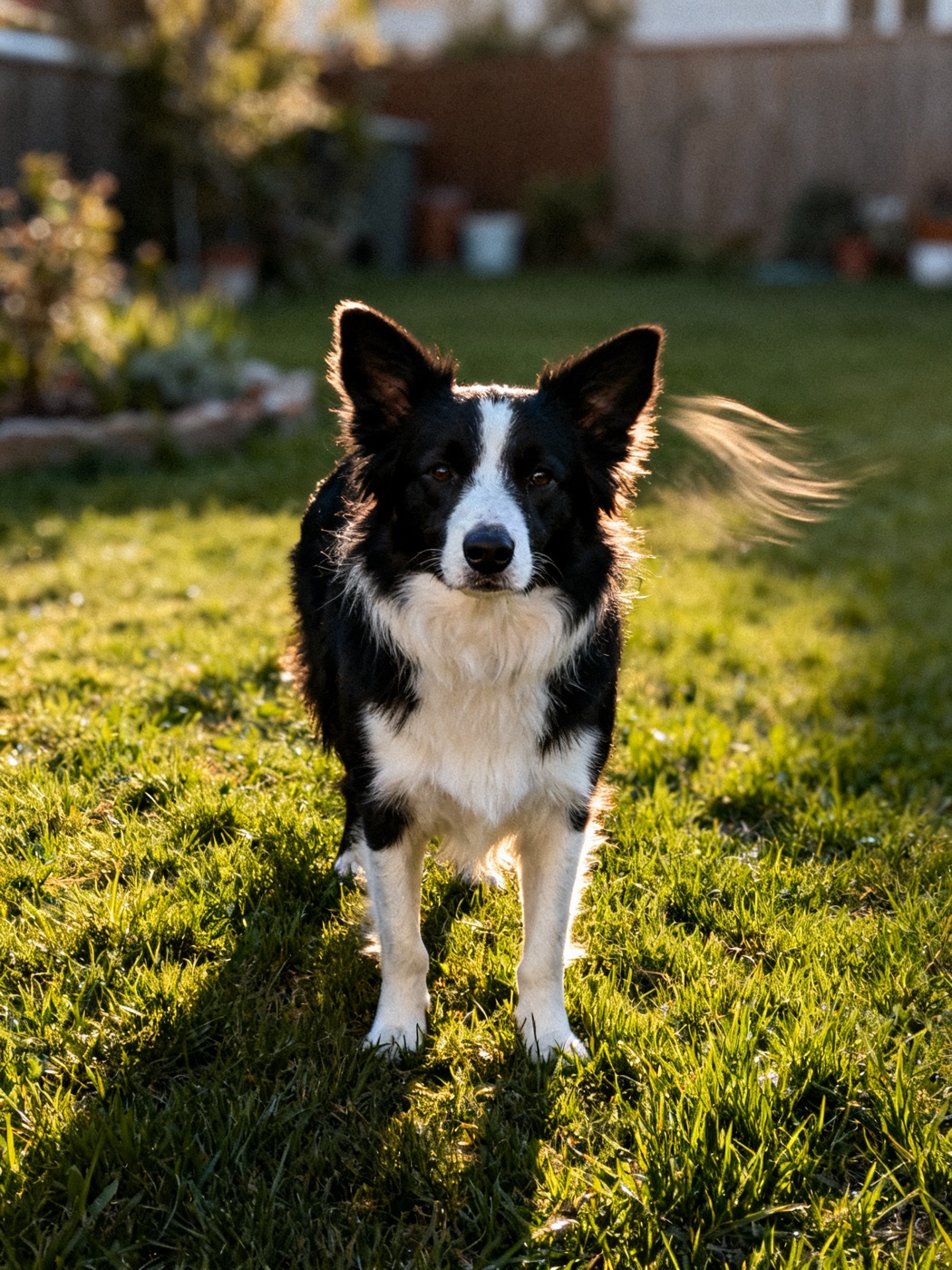 The phone photo Pepper's portraits started from
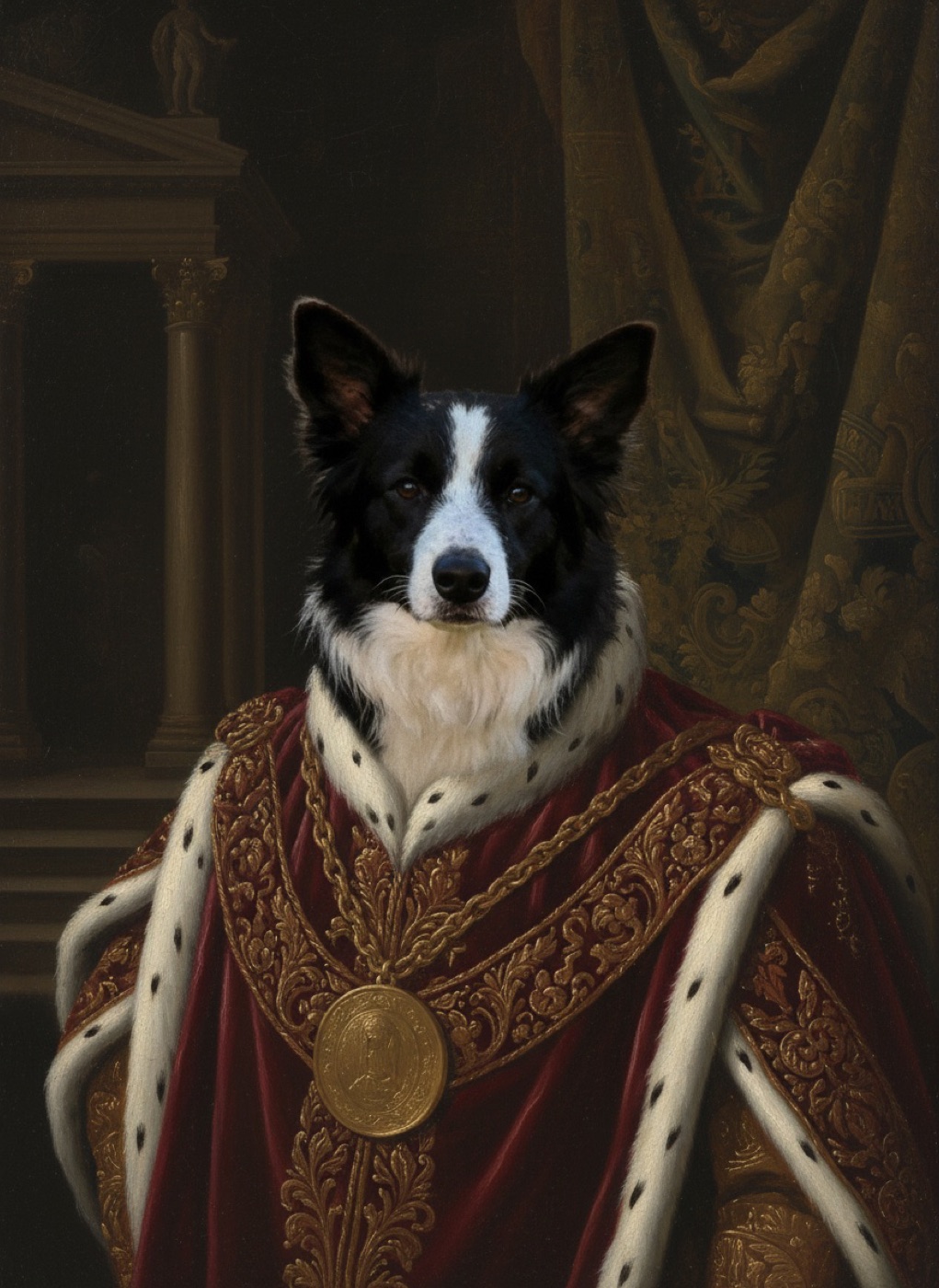 Style sample: Pepper, a border collie, in the Royal style
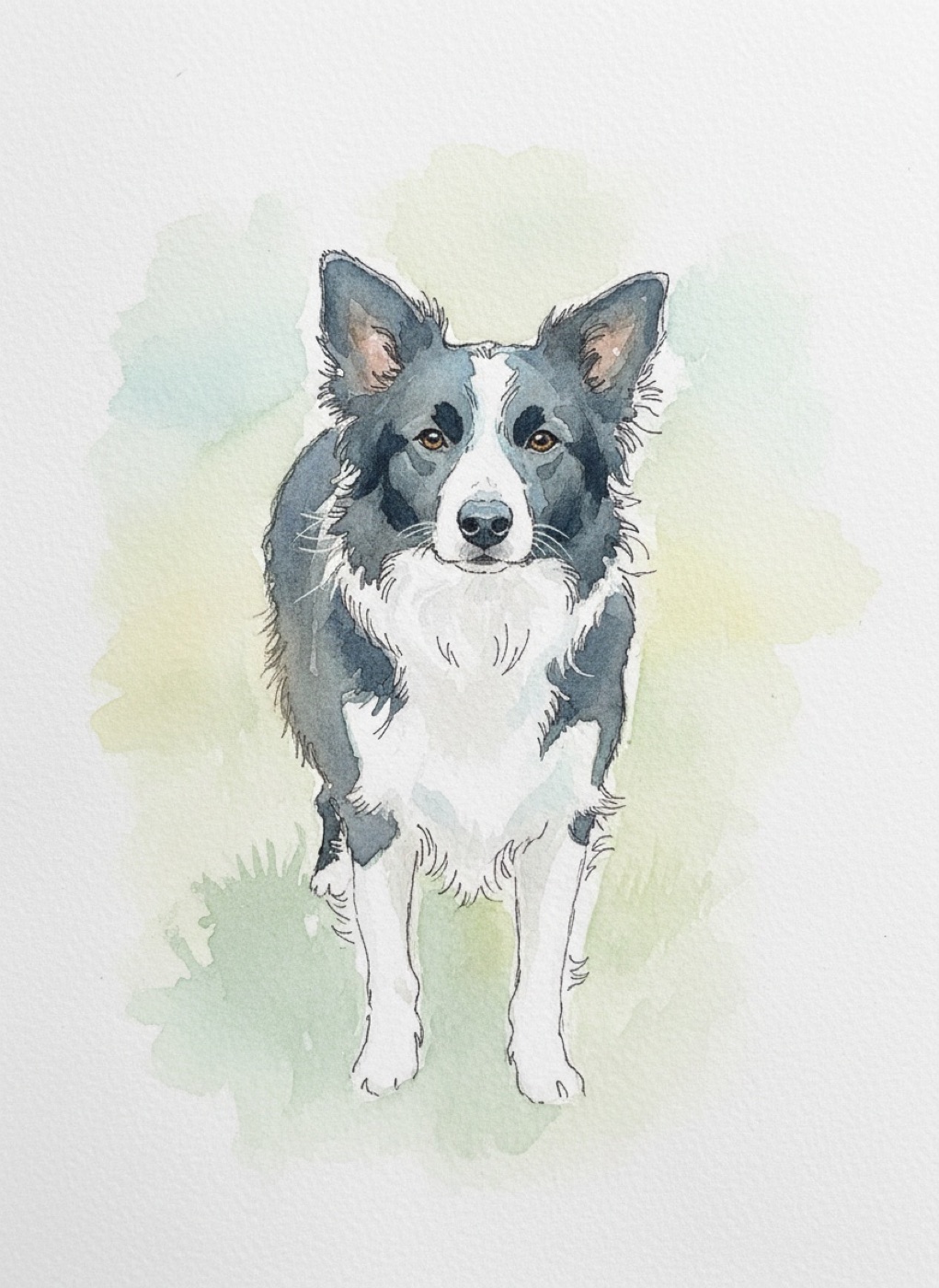 Style sample: Pepper, a border collie, in the Watercolor style
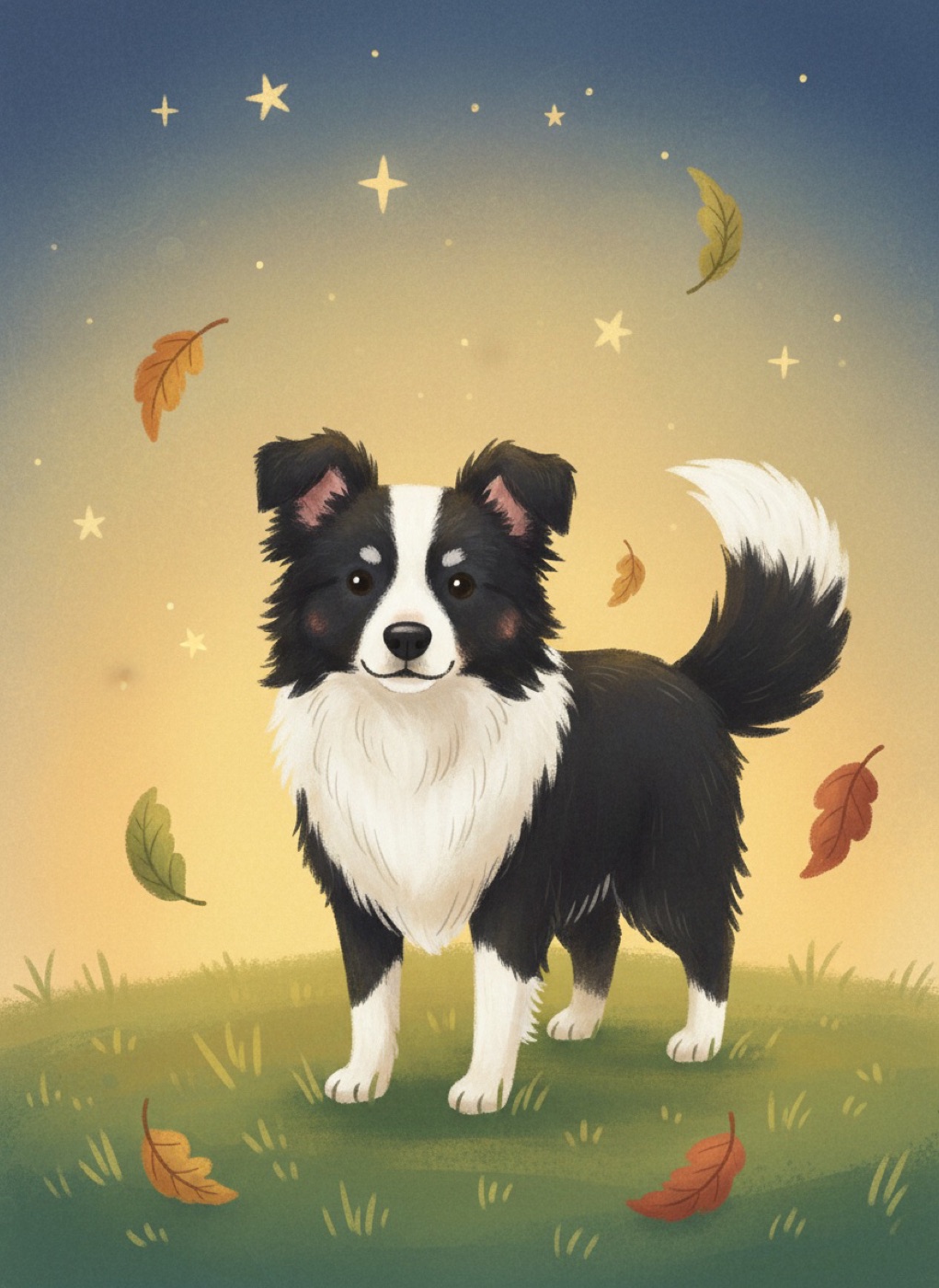 Style sample: Pepper, a border collie, in the Storybook style
Black and white or gray and white huskies
The white mask and the dark cap side by side fool the phone's exposure. Tap the white part of the face, then slide the brightness down until the fur on the muzzle shows texture. A mid-tone background, such as grass or a wood fence, keeps both the black ears and the white cheeks visible. The black cat art page covers dark fur exposure in more steps.
Red and copper huskies
Red coats with white masks blend into tan sofas and wood floors. Put the dog in front of something cooler, such as green hedges or a blue blanket. Late afternoon light warms the red without washing out the white.
Agouti and sable huskies
Agouti and sable guard hairs are banded with several colors, which looks muddy in dim light. Bright, soft daylight from a window shows the banding. Tap the face to focus so the fine shading around the eyes stays sharp.
White huskies and snow backgrounds
In a snow photo, the phone reads a white husky and the snow as one bright field and loses the outline of the dog. Photograph a white dog against a darker backdrop such as trees, a fence or a dark door. Royal places the dog against a dark museum background, which suits a white coat.
Matching a style and frame to your husky
Every style carries over the eyes, mask and coat colors from your photo. The pairings below are starting points chosen for contrast between dog, background and frame.
| Husky | Styles to start with | Frame |
|---|
| Blue eyes, black and white | Royal, Watercolor | White or natural wood |
| Brown eyes, gray and white | Royal, Storybook | Black or natural wood |
| Red or copper | Pop Art, Watercolor | Black or white |
| Agouti or sable | Royal, Storybook | Natural wood |
| White | Royal, Astronaut | Black |
Royal gives your husky a velvet cloak on a dark background, the closest look to a classic oil painting. See the Royal style. Watercolor uses soft washes that flatter blue eyes and gray coats; see the Watercolor style. Pop Art sets the face on flat bright color, Storybook draws the dog as a picture book hero, and Astronaut puts your husky in a white space suit with an open helmet.
Sizes and gift ideas
Each size names the picture itself, and the mat plus frame adds 1 7/8 in around every edge. An 8 x 10 in fits a desk or shelf. A 12 x 16 in lets the eyes read from across a room. The portrait size guide compares both. For a husky lover's birthday, see the dog birthday gift ideas. For the holidays, pet portrait Christmas gifts: timing and ideas covers when to order. For a husky who has died, the memorial portrait guide covers working with older photos.
Updated November 29, 2026