What the Royal style does
The style starts from your photo and keeps your pet's own face, markings, fur color and breed. Around that face it changes almost everything else:
- Costume. A velvet cloak, white ermine trim with dark flecks, and a gold medallion or chain. The cloak color varies from portrait to portrait.
- Background. A dark, moody backdrop like the walls of an old museum gallery, which makes the subject the brightest thing in the frame.
- Light. Strong light from one side, often called Rembrandt lighting, with soft shadow on the other side of the face.
- Texture. Visible oil paint brushstrokes, so the portrait reads as a painting from across the room rather than a photo with a costume pasted on.
Here is the same style on four different sample pets, each made from a single phone photo.
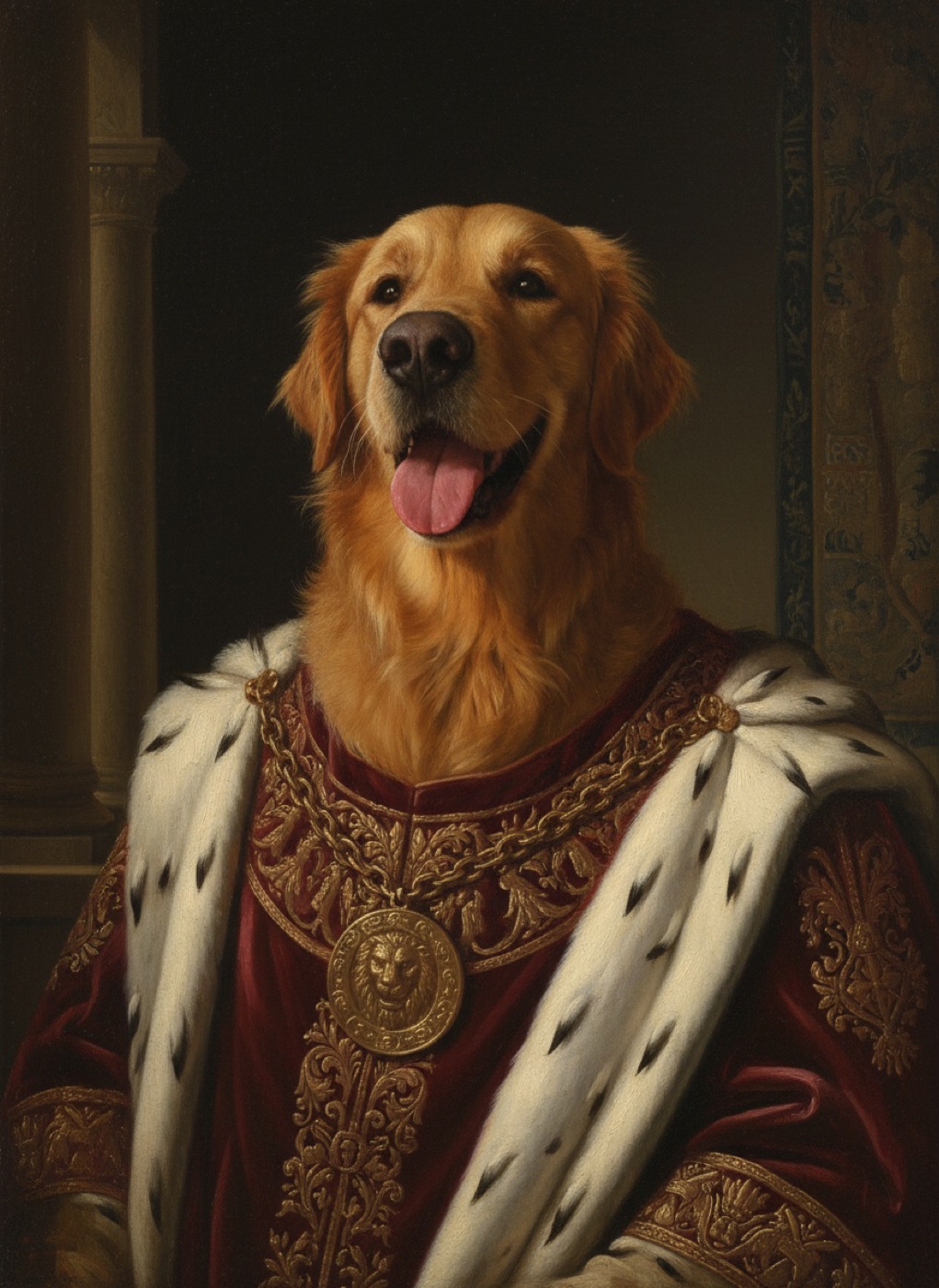 Style sample: Goldie, a golden retriever, in the Royal style
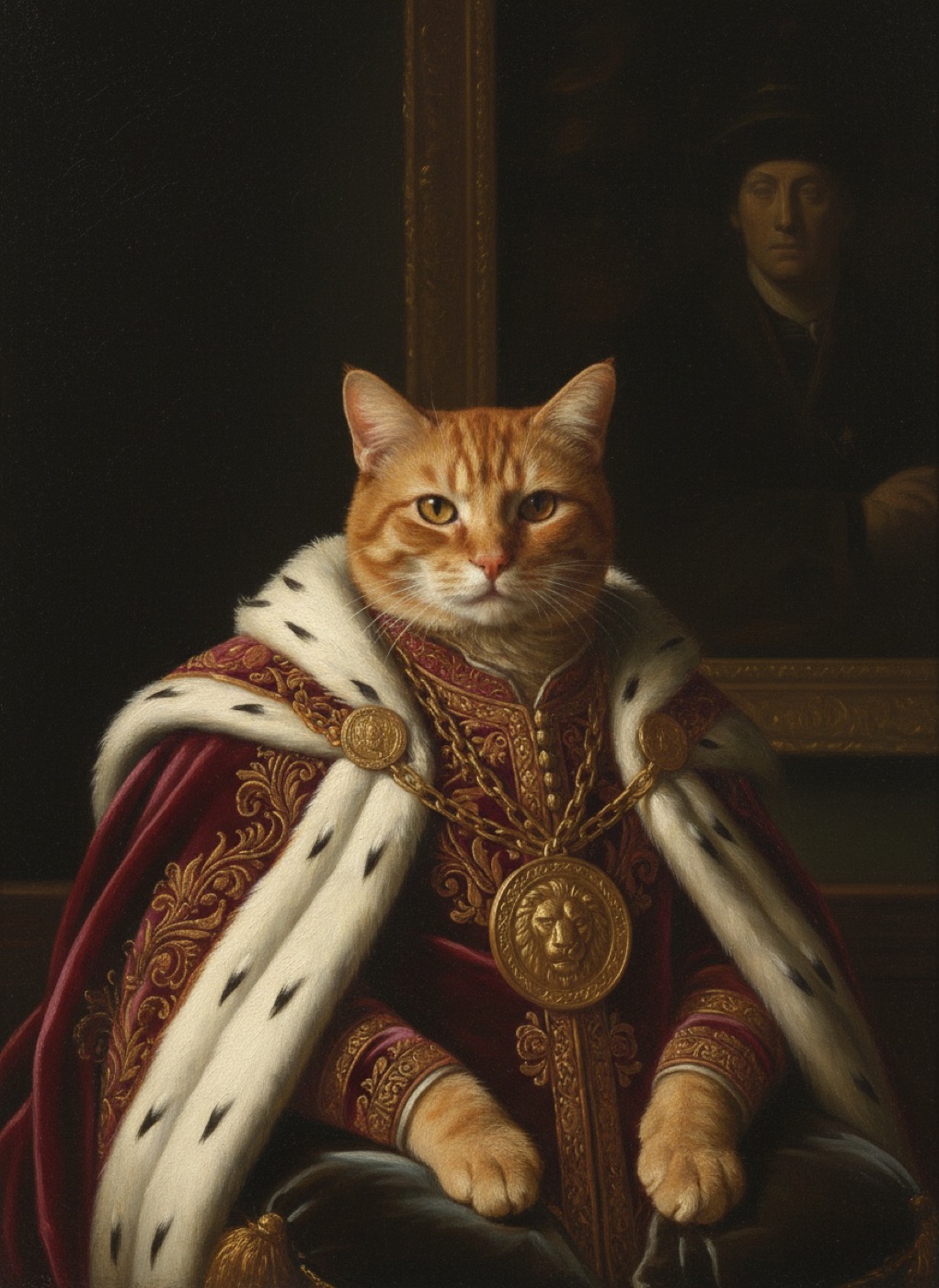 Style sample: Milo, a orange tabby cat, in the Royal style
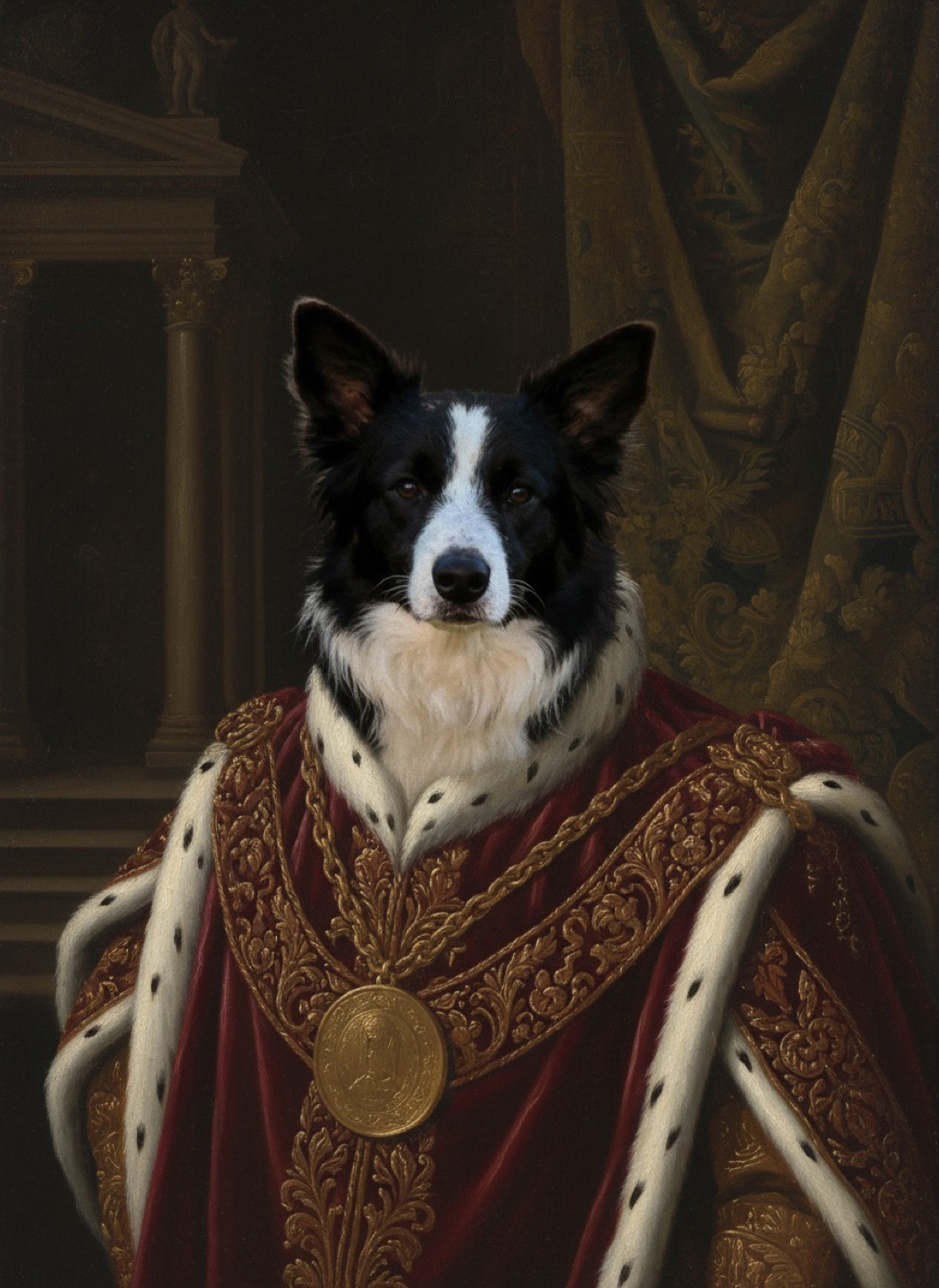 Style sample: Pepper, a border collie, in the Royal style
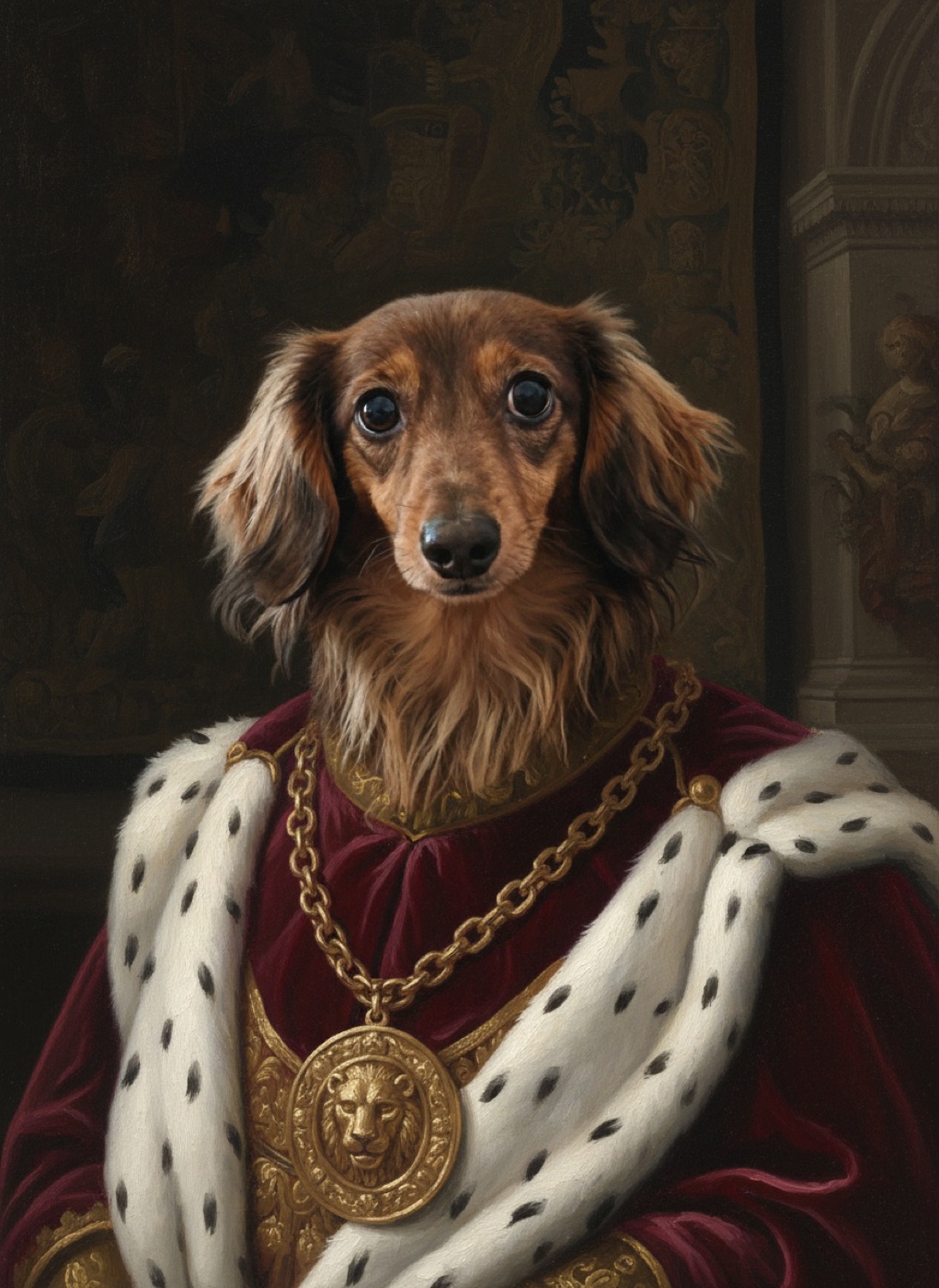 Style sample: Noodle, a long haired miniature dachshund, in the Royal style
Why it works so well on pets
The humor of a royal pet portrait comes from a mismatch: an animal with no idea what dignity is, painted with total seriousness. But it only lands when the portrait also looks good, and pets happen to be very good subjects for this kind of painting.
Animals do not smile for the camera, so their resting expression already looks composed, sometimes stern. Fur takes dramatic light beautifully. And most pets carry themselves like minor nobility anyway. A French bulldog's frown, a cat's half closed eyes, a golden retriever's patient gaze: all of these read as character in a formal portrait.
Which pets suit Royal best
Almost every pet works, but some features give especially strong results.
- Light coats (golden, cream, white, ginger) glow against the dark background. See the golden retriever guide for an example.
- Serious faces from bulldogs, pugs, boxers and many cats get the most laughs and the most compliments. The French bulldog guide shows Biscuit in full regalia.
- Long ears and long coats turn into flowing, painterly shapes. Noodle, our sample dachshund, is a good example; his story is in the dachshund guide.
- Dark coats work well too, but need a well lit photo so the face does not disappear into the background. Our photo guide covers how to light a black dog or cat.
The photo that works
For Royal, a calm front or three quarter view with the head slightly raised gives the most regal result. Eye level is best: photos from above make the pet look small, which works against the whole idea. Closed mouth photos tend to look more dignified than happy panting ones, though a tongue sticking out has its own charm.
Light matters. A photo in soft window light already looks a little like an old painting, and the style can build on that. Harsh sun or flash makes it harder to get the deep shadows the style is known for.
Framing a Royal portrait
The frame should feel like part of the joke and part of the room.
| Frame | Effect |
|---|
| Black | The most formal look. The dark frame continues the dark background, and the portrait feels like it came from a gallery. |
| Natural wood | Warmer and more like a family heirloom. Good in rooms with wood furniture. |
| White | A modern twist, best on a dark or colored wall. |
The drama of the painting carries well across a room, which makes Royal a strong candidate for the larger 12 x 16 in size. The 8 x 10 in size works on a desk or as part of a gallery wall. See our size guide for more.
Royal as a gift
The Royal style is the safest choice when you are giving a portrait to someone else. It is funny without being silly, it suits almost any pet, and it looks at home in most houses. It works for holidays and birthdays alike; our Christmas gift guide covers timing. For a pet who has passed, Royal is a fitting choice when you want to honor the animal's personality. Read more in the memorial portrait guide.
Updated October 8, 2026