Photographing a cat who will not cooperate
Dogs can be bribed into a sit. Cats mostly cannot. The trick is to photograph them where they already sit still.
- The windowsill. Cats love a sunny window, and the window is also the best light in the house. Stand inside, facing the cat, so the light falls on the face. Our sample cat, Milo, was photographed exactly there.
- The favorite chair or bed. A sleepy, settled cat gives you time to get the phone at eye level.
- Just after a meal. A fed cat is a calm cat, and often a cat that sits and washes in one spot.
Get down to the cat's level, turn off the flash, and wait for the eyes to open. A soft blink or a slow look toward the camera is worth more than any toy. If you use a toy, hold it just above the phone, so the cat looks almost at the lens.
Ginger fur and how it prints
Orange tabbies have stripes, and the stripes are what make a portrait look like your cat rather than any orange cat. In very bright sun they wash out to a single color, so look for a photo in softer light where you can see the pattern on the forehead and cheeks.
Orange and white cats are similar to other bicolor pets: soft light keeps detail in the white areas. Cream or pale ginger cats look especially good in Royal, where the dark background makes the coat glow.
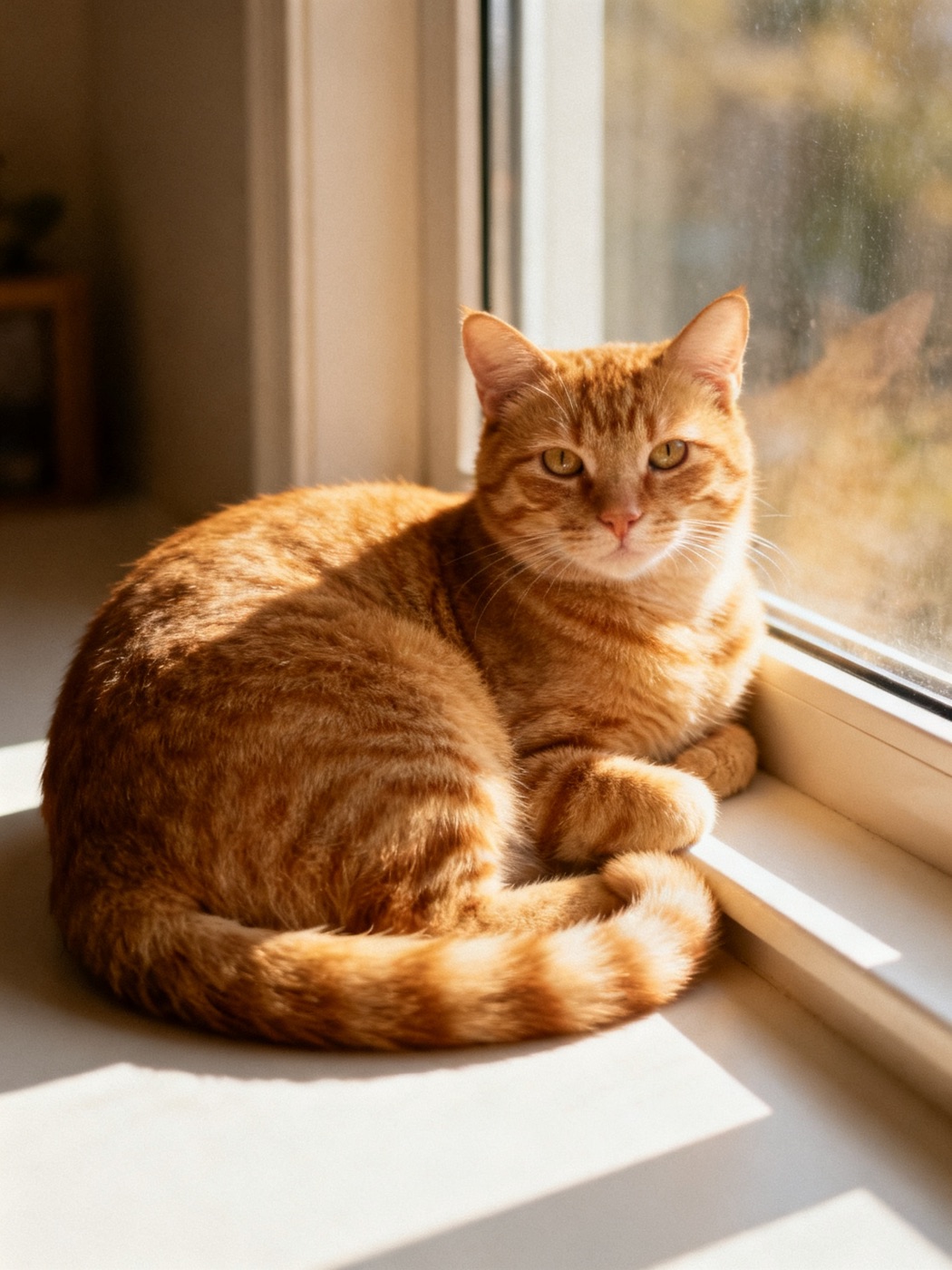 The phone photo Milo's portraits started from
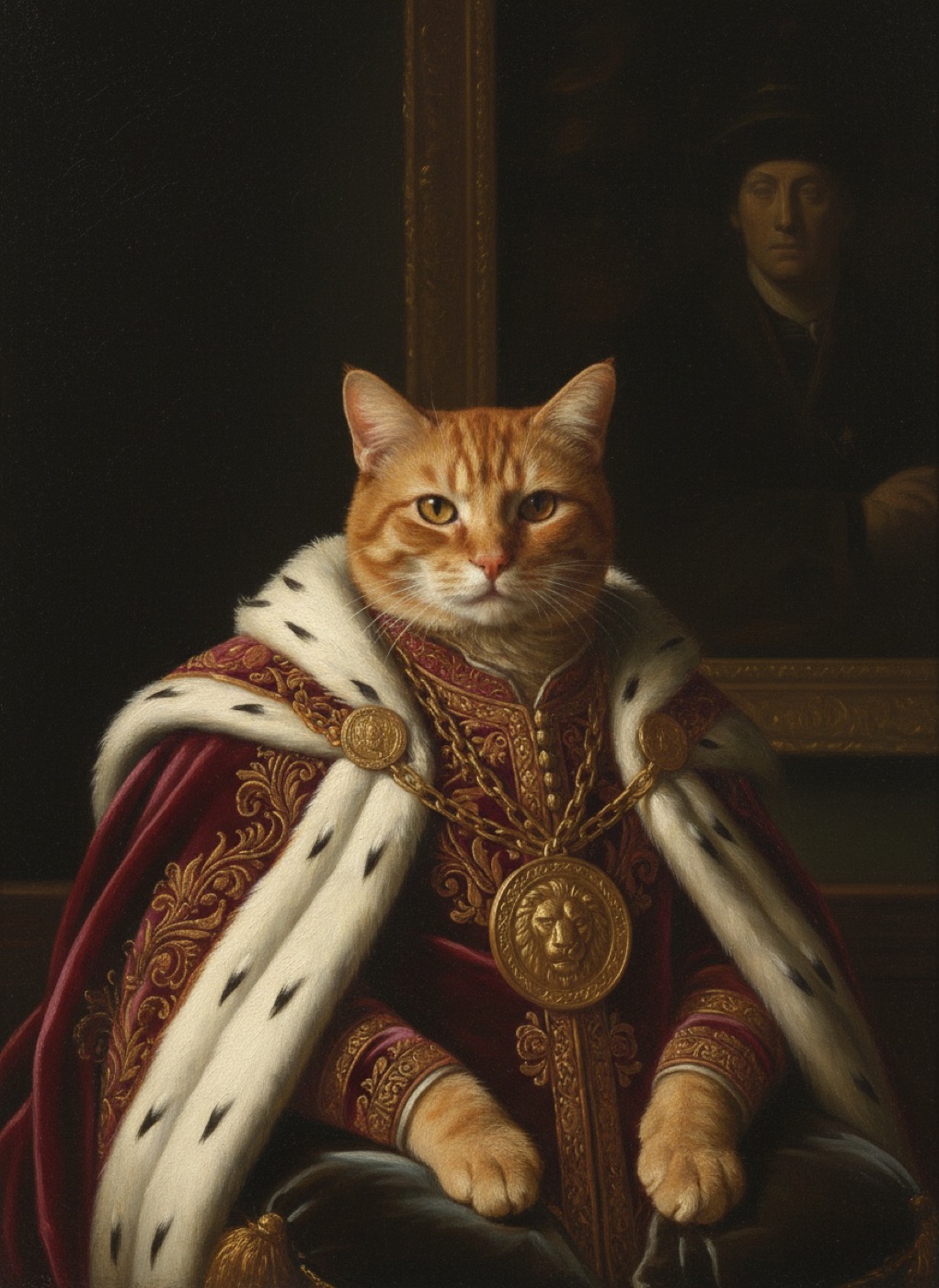 Sample portrait: Milo, a orange tabby cat, in the Royal style
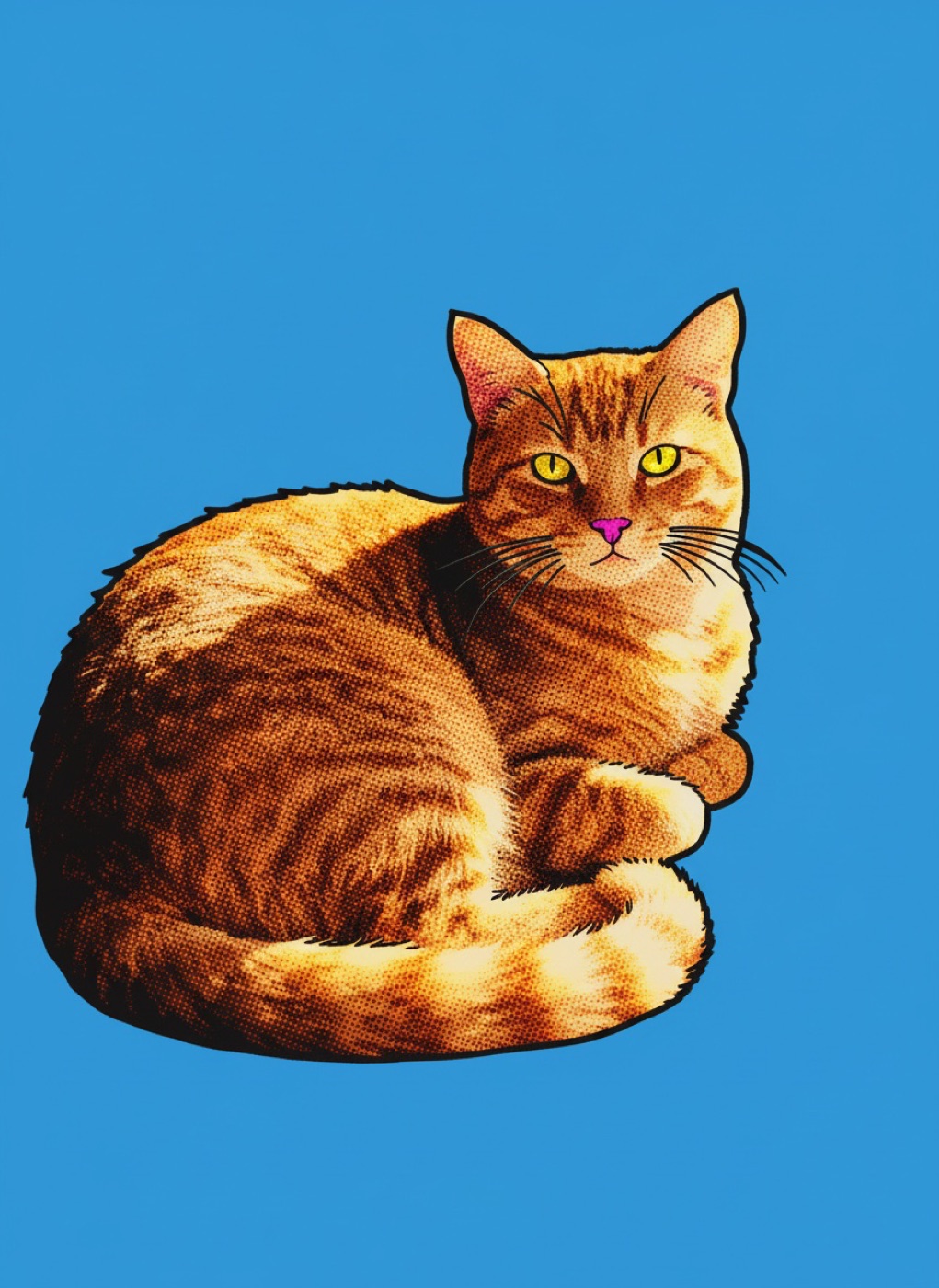 Sample portrait: Milo, a orange tabby cat, in the Pop Art style
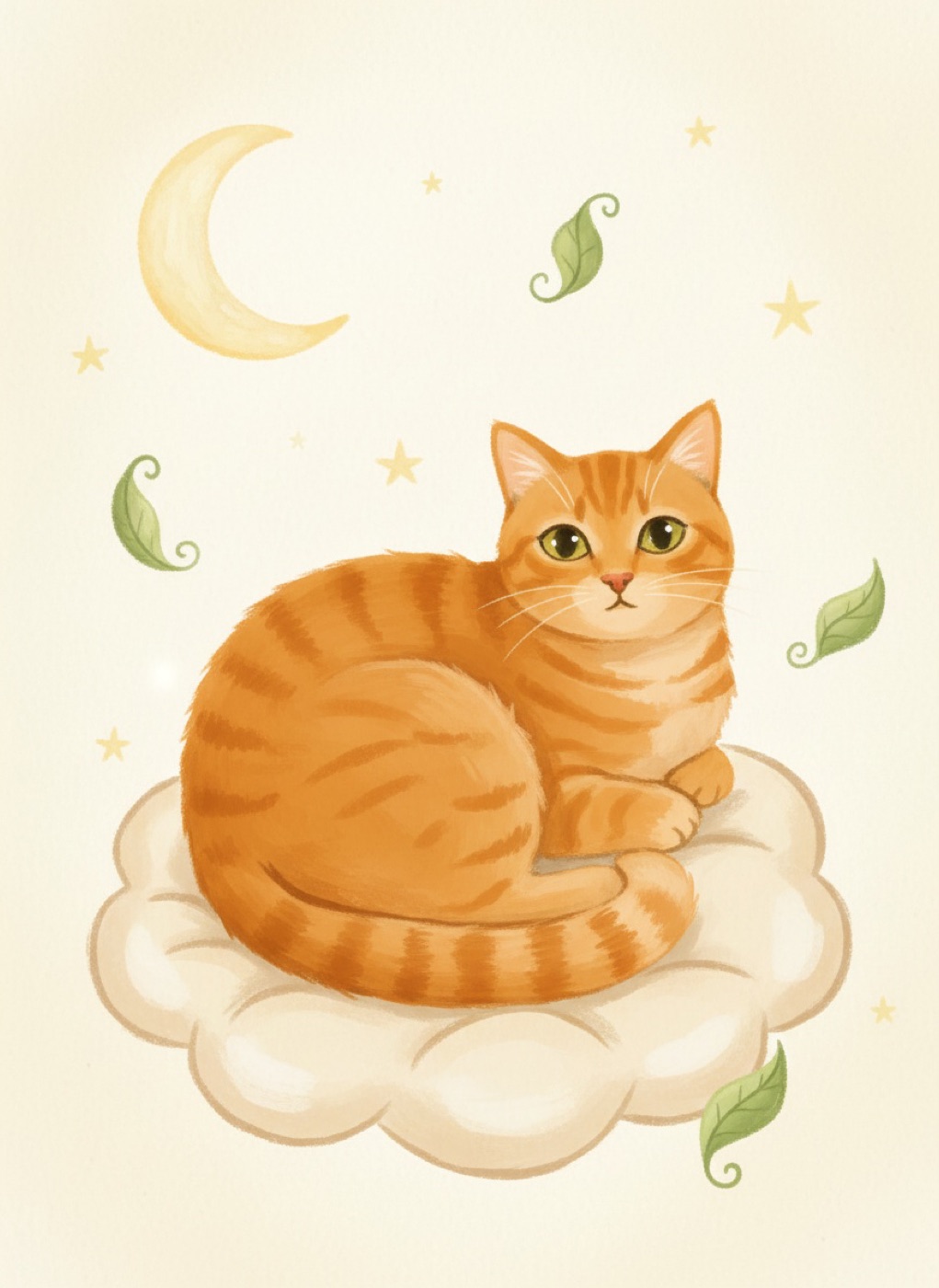 Sample portrait: Milo, a orange tabby cat, in the Storybook style
Styles that suit an orange cat
Royal is the obvious choice for a cat who already believes they own the house. Milo's Royal portrait, shown at the top of this page, gives him velvet, ermine and the expression of a minor lord inspecting his estate. The style is covered in more depth in the Royal style guide, with dogs for comparison.
Pop Art might suit an orange cat even better. Ginger fur becomes bold saturated orange with thick black outlines, and the bright background color makes it look like a print from a modern art museum. Milo, Loud and Orange, the Pop Art sample above, is one of the pieces we use to show the style. The Pop Art guide explains how the background color is chosen.
Storybook gives a gentle illustrated look, a cat as the hero of a bedtime book. It suits a kitten, a family cat that belongs to the kids, or a reading nook.
Watercolor works well with an orange cat on white paper. Astronaut is available too, for the cat who has knocked enough things off enough tables to deserve a space program.
Frame colors for ginger cats
| Style | Frame we would pick |
|---|
| Royal | Black, to continue the dark museum background |
| Pop Art | White, which keeps the colors crisp |
| Storybook or Watercolor | Natural wood, which picks up the warmth of the fur |
Each framed portrait has a one inch white mat between the art and the frame, so even a bright orange portrait has room to breathe.
Where a cat portrait goes
Cat portraits are usually smaller and more personal than dog portraits. The 8 x 10 in size is the most common choice for a cat: a bookshelf, a desk, a bedside table, or a gallery wall with other family photos. The 12 x 16 in size makes a statement above a sofa or bed. Our size guide has the details.
For cat lovers
Gifts for cat lovers tend toward cat themed things: mugs, socks, tote bags with a cartoon cat that looks like nobody's cat in particular. A portrait of their own cat is the opposite. If you are planning one as a surprise, the cat's owner has almost certainly posted a good windowsill photo somewhere. For timing around the holidays, see our Christmas gift guide. For a cat who has passed, our memorial portrait guide covers choosing a photo with care.
Updated October 8, 2026